Essential GRE Quant Formulas & Concepts: Flashcard Mastery for Quick Revision
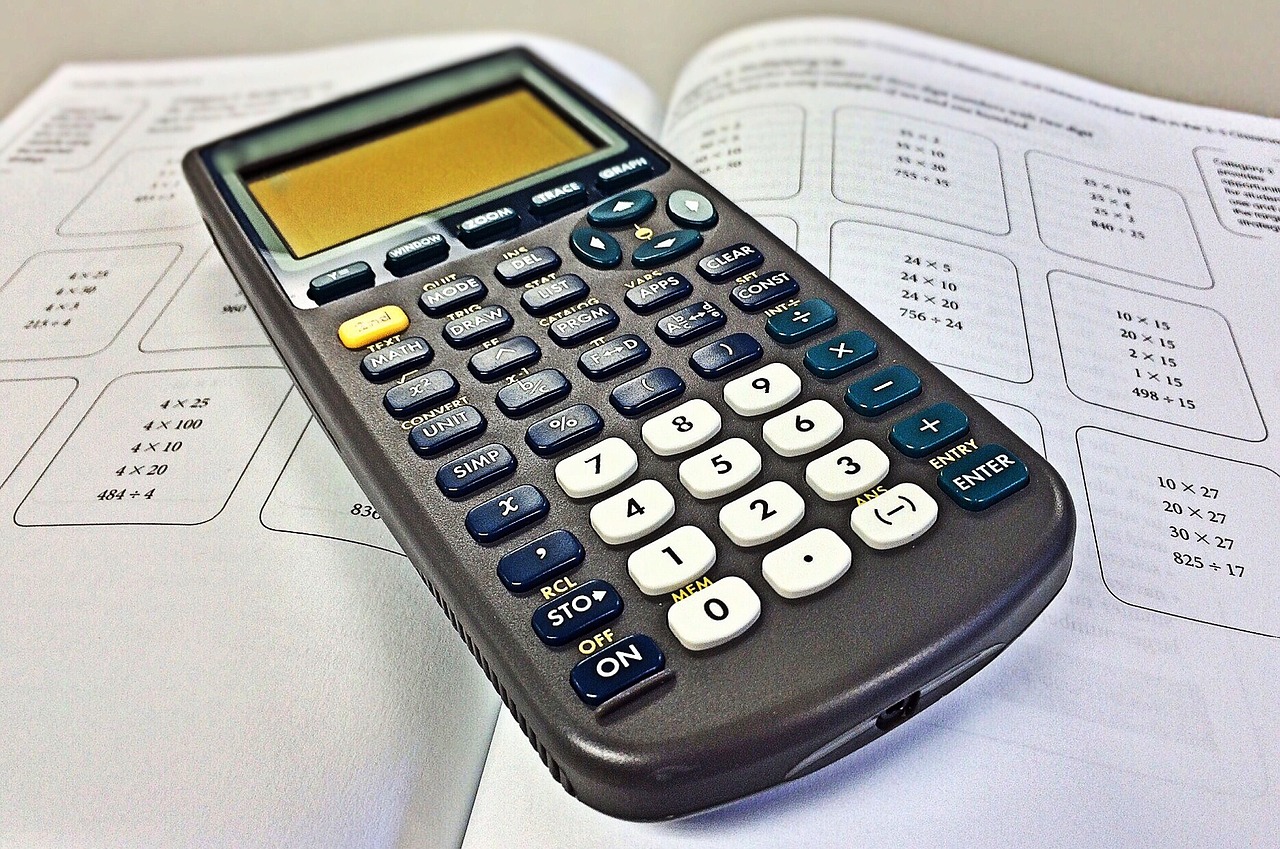
The GRE Quantitative Reasoning section often feels like a formidable challenge for many test-takers. While the math itself generally doesn't go beyond high school level, the sheer breadth of topics, the intricate problem-solving, and the time constraints can be daunting. A key to unlocking success in this section isn't just understanding concepts but also having essential formulas and mathematical properties at your fingertips. This is where flashcards become an invaluable tool for quick revision and mastery.
Memorizing formulas alone isn't enough; you need to understand when and how to apply them. However, having them readily accessible in your memory significantly speeds up problem-solving, freeing up precious time for complex logic or calculations. Let's dive into the core GRE Quant areas and highlight the indispensable formulas and concepts that deserve a spot on your flashcards.
Key GRE Quant Areas and Essential Formulas
The GRE Quantitative Reasoning section broadly covers Arithmetic, Algebra, Geometry, and Data Analysis. Each area has its own set of fundamental formulas and concepts.
1. Arithmetic
Arithmetic forms the bedrock of GRE Quant. Focus on number properties, operations, and basic relationships.
- Percentages:
- Percent Change = $\frac{\text{New Value - Old Value}}{\text{Old Value}} \times 100\%$
- Original Value after x% increase =
New Value / (1 + x/100) - Original Value after x% decrease =
New Value / (1 - x/100)
- Ratios: Represent relationships between quantities (e.g., A:B = $2:3$). Remember that ratios can be scaled up or down.
- Fractions & Decimals:
- Converting fractions to decimals and vice-versa.
- Basic operations: addition, subtraction, multiplication, division.
- Exponents & Roots:
- Product Rule: $x^a \cdot x^b = x^{a+b}$
- Quotient Rule: $\frac{x^a}{x^b} = x^{a-b}$
- Power Rule: $(x^a)^b = x^{ab}$
- Negative Exponent: $x^{-a} = \frac{1}{x^a}$
- Fractional Exponent: $x^{1/n} = \sqrt[n]{x}$
- Divisibility Rules: Rules for 2, 3, 4, 5, 6, 8, 9, 10 (e.g., a number is divisible by 3 if the sum of its digits is divisible by 3).
- Prime Numbers: Numbers greater than 1 with exactly two distinct positive divisors: 1 and itself (e.g., 2, 3, 5, 7, 11).
- Factors and Multiples: Understanding how to find prime factors, GCF (Greatest Common Factor), and LCM (Least Common Multiple).
2. Algebra
Algebra on the GRE tests your ability to manipulate expressions, solve equations, and understand functions.
- Linear Equations: Solving for a single variable (e.g., $ax + b = c$).
- Quadratic Equations:
- Factoring (e.g., $x^2 + 5x + 6 = (x+2)(x+3)$)
- Quadratic Formula: For $ax^2 + bx + c = 0$, $x = \frac{-b \pm \sqrt{b^2 - 4ac}}{2a}$
- Inequalities: Solving and manipulating inequalities (remember to flip the sign when multiplying/dividing by a negative number).
- Functions: Basic function notation $f(x)$, understanding domain and range.
- Sequences:
- Arithmetic Sequence: $an = a1 + (n-1)d$ (where $d$ is the common difference)
- Geometric Sequence: $an = a1 \cdot r^{n-1}$ (where $r$ is the common ratio)
3. Geometry
Geometry questions can range from basic shapes to coordinate geometry. Visualizing problems is often as important as knowing formulas.
- Triangles:
- Area: $\text{Area} = \frac{1}{2} \times \text{base} \times \text{height}$
- Pythagorean Theorem: $a^2 + b^2 = c^2$ (for right triangles)
- Special Right Triangles: $30-60-90$ (sides $x, x\sqrt{3}, 2x$) and $45-45-90$ (sides $x, x, x\sqrt{2}$)
- Sum of angles in a triangle = $180^\circ$
- Circles:
- Area: $\text{Area} = \pi r^2$
- Circumference: $\text{Circumference} = 2\pi r$ or $\pi d$
- Arc Length: $\text{Arc Length} = \frac{\theta}{360^\circ} \times 2\pi r$ (where $\theta$ is the central angle in degrees)
- Sector Area: $\text{Sector Area} = \frac{\theta}{360^\circ} \times \pi r^2$
- Quadrilaterals:
- Square Area: $s^2$
- Rectangle Area: $l \times w$
- Parallelogram Area: $b \times h$
- Trapezoid Area: $\frac{1}{2} (b1 + b2)h$
- 3D Shapes:
- Volume of a Rectangular Solid (Box): $l \times w \times h$
- Volume of a Cylinder: $\pi r^2 h$
- Surface Area of a Cube: $6s^2$
- Angles & Parallel Lines: Transversals intersecting parallel lines create equal alternate interior/exterior angles and consecutive interior angles that sum to $180^\circ$.
- Coordinate Geometry:
- Distance Formula: $D = \sqrt{(x2 - x1)^2 + (y2 - y1)^2}$
- Midpoint Formula: $(\frac{x1 + x2}{2}, \frac{y1 + y2}{2})$
- Slope: $m = \frac{y2 - y1}{x2 - x1}$
- Equation of a line: $y = mx + b$
4. Data Analysis (Statistics & Probability)
This section tests your understanding of statistical measures, probability, and data interpretation.
- Measures of Central Tendency:
- Mean (Average): Sum of values / Number of values
- Median: The middle value when data is ordered (average of the two middle values for an even set).
- Mode: The most frequently occurring value.
- Range: Max value - Min value.
- Standard Deviation: Measures the spread of data points around the mean (understand the concept, usually not asked to calculate it from scratch).
- Probability:
- $P(\text{event}) = \frac{\text{Number of favorable outcomes}}{\text{Total number of possible outcomes}}$
- $P(\text{A and B}) = P(A) \times P(B)$ (for independent events)
- $P(\text{A or B}) = P(A) + P(B) - P(\text{A and B})$ (for any events)
- Combinations & Permutations:
- Permutations ($nPr = \frac{n!}{(n-r)!}$): Order matters.
- Combinations ($nCr = \frac{n!}{r!(n-r)!}$): Order doesn't matter.
Flashcard Mastery for Quick Revision
Now that you have a comprehensive list of what to memorize, let's talk about how to use flashcards effectively. Flashcards leverage active recall and spaced repetition – two highly effective learning techniques.
How to Create Effective Flashcards
- Front of the Card:
- Formula Name/Concept: E.g., "Area of a Trapezoid," "Pythagorean Theorem," "Percentage Increase."
- A Simple Problem: E.g., "If an item increases from $50 to $60, what's the percent increase?"
- A Diagram: For geometry formulas, draw the shape and label the variables.
- Back of the Card:
- The Formula: Clearly written.
- Example Application/Explanation: Show a step-by-step solution to the problem on the front, or a brief explanation of the concept.
- Key Conditions/Notes: E.g., for $a^2 + b^2 = c^2$, note "Only for right triangles."
Example Flashcard:
Front:
Area of a Triangle(with a small diagram showing base and height)Back:
Area = 1/2 * base * heightFront:
How to find the median of an even set of numbers?Back:
1. Order the numbers. 2. Take the average of the two middle numbers.
Tips for Using Flashcards
- Be Consistent: Review a small batch of cards daily rather than cramming once a week. Consistency builds stronger memory retention.
- Mix It Up: Don't just study one subject at a time. Mix arithmetic, algebra, geometry, and data analysis cards to simulate the varied nature of the actual test.
- Active Recall is Key: When you see the front of the card, try to recall the answer or formula before flipping. If you struggle, that's a good sign it needs more review.
- Spaced Repetition: Use a system (physical or digital) to review cards you struggle with more frequently and cards you know well less frequently. Apps like Anki are built on this principle.
- Don't Just Memorize, Understand: After recalling a formula, take a moment to understand why it works or how it's derived. This deepens your understanding and makes it easier to apply in varied contexts.
- Integrate with Practice: After reviewing your flashcards, immediately apply the learned formulas to practice problems. This cements the knowledge and builds problem-solving speed. Many resources, including a GRE Quantitative Reasoning prep app, offer practice questions that help solidify your understanding of these essential concepts.
Beyond Formulas: General GRE Quant Study Tips
- Practice Problem Solving: Formulas are tools; practice problems are the workshop where you learn to use them. Work through a wide variety of question types.
- Identify Your Weaknesses: Pay extra attention to areas where you consistently make mistakes. Your flashcards should reflect these weak spots.
- Understand Traps: GRE questions are designed to test your reasoning, not just your knowledge. Be aware of common pitfalls and distractors.
- Time Management: Practice solving problems under timed conditions. Flashcard mastery contributes to this by reducing the time spent recalling basic information.
Conclusion
Mastering the essential GRE Quant formulas and concepts is a non-negotiable step toward achieving a high score. By systematically breaking down the topics, creating effective flashcards, and utilizing active recall and spaced repetition, you can build a strong foundation of readily accessible knowledge. Combine this memorization technique with consistent problem-solving practice, and you'll be well-prepared to tackle the GRE Quantitative Reasoning section with confidence.

🎯 Ready to Excel?
Master the GRE Quantitative Reasoning test with comprehensive practice questions, detailed explanations, smart study tools, and performance tracking.